

En el mercado de pantallas comerciales de 2026, el presupuesto promedio para una pantalla LED interactiva de suelo suele oscilar entre $1800 y $4200 por metro cuadrado. Sin embargo, centrarse únicamente en el precio unitario suele ser el primer paso hacia un sobrecosto.
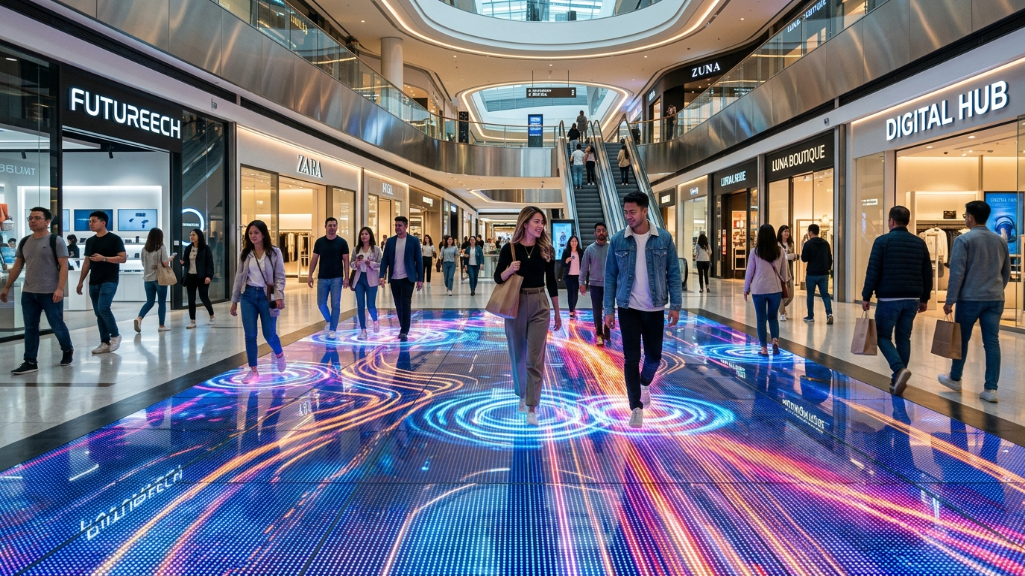
Para ayudarle a comprender claramente la estructura de costos completa antes de tomar una decisión de compra, hemos resumido los rangos de precios típicos a continuación:
| Tipo de especificación | Paso de píxeles | Tecnología central | Precio estimado (USD/m2) | Mejores escenarios de aplicación |
|---|---|---|---|---|
| Nivel de entrada / Estándar | P3.9 – P4.8 | Detección por infrarrojos (IR) | $1,500 – $2,200 | Bodas, pequeñas salas de exposiciones. |
| Profesional convencional | P2.6 – P2.9 | Detección de presión / chips integrados | $2,500 – $3,500 | Tiendas insignia minoristas, restaurantes inmersivos |
| Rendimiento extremo | P1.9 – P2.5 | Detección dual (presión + IR) / GOB | $3,800 – $5,000+ | XR virtual studios, esports events |
For procurement managers in entertainment companies or engineers in manufacturing projects, the real headache is rarely the initial quote. The real issue is the “hidden costs”—sensor delays, dead LEDs caused by load deformation, and expensive long-term maintenance.
With 14 years of experience in the LED industry, Sostron operates a 15,000 m² smart manufacturing base and a 4,000 m² R&D center. From our experience, the truly expensive part isn’t the screen itself—it’s the downtime when the screen fails.
As a national high-tech enterprise, we’ll break down the pricing logic behind interactive LED floor screens in 2026 from a professional manufacturing perspective.
The Real Cost Range: How Much Does an Interactive Floor LED Screen Cost?
During the quotation stage, many buyers fall into what we call the “quote comparison trap.”
In reality, the price of an interactive LED floor screen is not a fixed number—it represents an investment ratio between stability and interaction accuracy.
Why Can Price Differences Reach 200%?
Based on our monitoring of the global LED supply chain from 2024–2026, fluctuations in raw materials—such as aluminum, chips, and PCB packaging—account for only about 30% of the price difference.
The remaining 70% is determined by manufacturing standards and engineering processes.
Hardware Base Cost
Includes:
-
LED lamp beads
-
Driver ICs
-
Power supplies
-
Die-cast aluminum cabinets
Interaction Technology Premium
External infrared frame systems cost about 15% less than screens with built-in sensing chips.
However, they also come with drawbacks:
-
Lower sensing accuracy
-
More complicated installation
-
Limited multi-touch capabilities
Protection Solution Cost
The difference between a standard protective mask and a GOB (Glue on Board) encapsulated screen is significant.
While GOB increases the cost by 10%–15%, it dramatically improves:
-
Moisture resistance
-
Wear resistance
-
Dead-pixel prevention
Over a three-year lifecycle, GOB technology can reduce Total Cost of Ownership (TCO) by up to 40%.
Sostron Industry Insight
Based on our experience across 500+ global projects, we found that 85% of engineering repairs occur because buyers initially chose non-aluminum cabinet structures to save about 15% on the unit price.
At Sostron’s 15,000 m² production base, every floor LED screen undergoes a 2,000 kg/m² extreme load-bearing test.
This level of quality assurance is something low-cost export factories simply cannot provide.
Five Critical Factors That Dictate the Price Tag
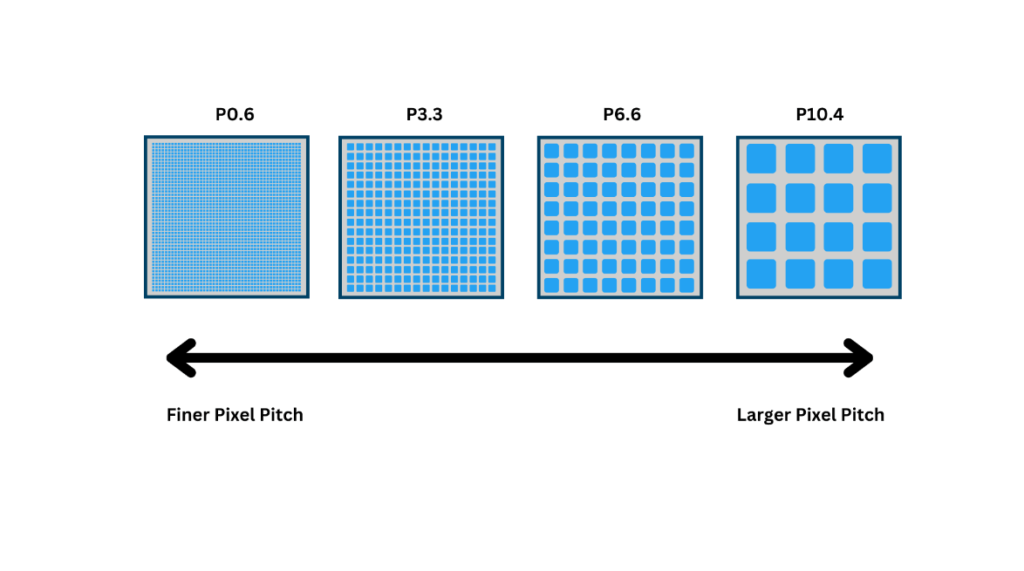
To understand why the Hima All-Purpose Rental Series commands a premium price in XR stage environments, we need to examine five major cost drivers.
Pixel Pitch (P2.6 vs P4.8)
Pixel pitch determines visual resolution.
-
P4.8 / P3.9
Primarily used in stage rental environments where audiences view the screen from a distance.
Offers the best price-to-performance ratio. -
P2.6 / P2.9
La opción predominante en 2026, que equilibra imágenes de alta definición con interacción receptiva. -
Por debajo de P1.9
Se considera una configuración premium, utilizada principalmente para producción virtual (estudios XR) donde las cámaras capturan la pantalla a corta distancia.
Tecnología de interacción: sensores de presión e infrarrojos
La tecnología de interacción es a menudo el principal diferenciador de precios.
Detección infrarroja
-
Detecta obstrucciones mediante marcos IR alrededor de la pantalla.
-
No se puede detectar con precisión la función multitáctil
-
Sensible a la interferencia de la iluminación ambiental.
Chips de sensores incorporados
Cada módulo incluye puntos de detección internos.
Según datos de la industria de 2026, los tiempos de respuesta pueden caer por debajo de los 20 ms, lo que permite una interacción multitáctil ilimitada.
Aunque es un poco más cara, esta tecnología constituye la base de experiencias interactivas inmersivas.
Protección y durabilidad (clasificación IP y encapsulamiento)
Las pantallas LED de suelo deben soportar el tránsito peatonal, el sudor y las bebidas derramadas.
Los elementos clave de protección incluyen:
-
Niveles de protección IP65–IP68
-
Tecnología de encapsulado impermeable de doble cara
Las mamparas de suelo Sostron utilizan sellado de doble cara para garantizar su durabilidad.
Tecnología de superficies protectoras
Las mascarillas antideslizantes de alto polímero deben proporcionar:
-
Resistencia al rayado
-
Rendimiento antideslumbrante
-
Durabilidad al desgaste a largo plazo
Frecuencia de actualización y controlador IC
Para aplicaciones como transmisión de TV o grabación XR, una frecuencia de actualización de 7680 Hz es esencial.
Para lograr esto se necesitan circuitos integrados de controlador de alta gama, como chipsets avanzados de fabricantes líderes.
Esto aumenta el costo de cada módulo en aproximadamente $50–$120.
Estructura portante (aluminio vs. acero)
El marco estructural de una mampara de suelo es fundamental.
-
Los gabinetes totalmente de aluminio (utilizados en productos como la serie ARES) proporcionan una mejor disipación del calor y resistencia a la deformación.
-
Los gabinetes de acero son más baratos, pero pueden oxidarse o deformarse bajo presión a largo plazo, especialmente en ambientes húmedos.
Esta deformación a menudo provoca una alineación desigual del módulo, lo que genera problemas de visualización.
Los “costos ocultos” que la mayoría de los proveedores no le dirán
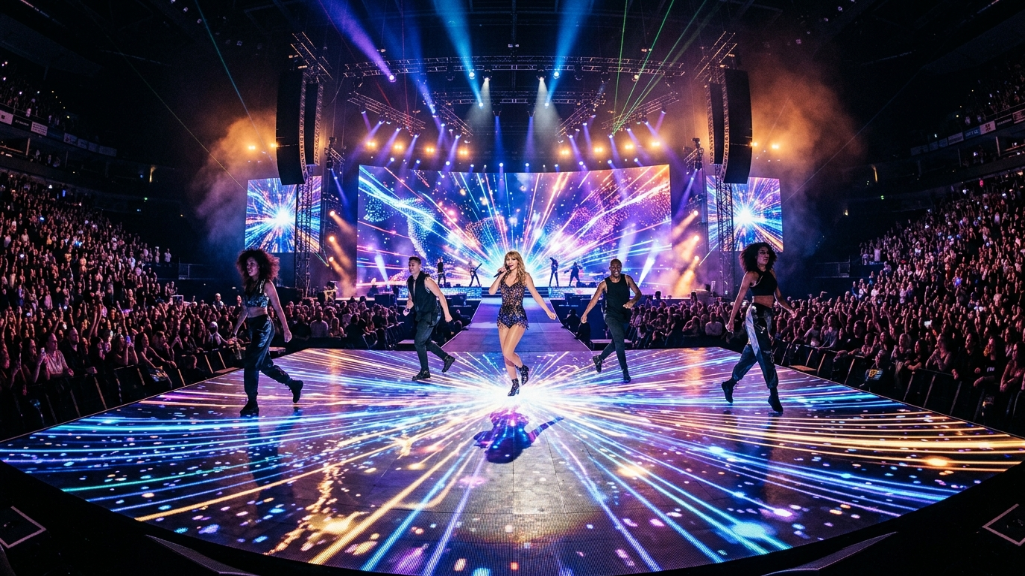
En la adquisición de LED de 2026, los compradores experimentados ya no se centran únicamente en el precio por metro cuadrado.
Si su presupuesto solo incluye la pantalla LED, el costo final del proyecto podría superar las expectativas entre un 30% y un 50%.
A continuación se muestra la lista de verificación de costos ocultos que hemos compilado a partir de 14 años de experiencia en la industria.
| Artículo de costo | Porcentaje (relativo al costo de la pantalla) | Por qué es importante |
|---|---|---|
| Procesador de vídeo y caja de envío | 5% – 8% | Las pantallas de piso interactivas requieren altas frecuencias de actualización y procesamiento de datos de detección en tiempo real para evitar el desgarro de la imagen. |
| Estructura de acero y soportes de nivelación | 10% – 15% | Las mamparas de suelo requieren superficies extremadamente planas; los sistemas de rieles ajustables garantizan una distribución uniforme de la carga. |
| Licencia de software interactivo | 3% – 7% | Efectos como flores interactivas o seguimiento de movimiento dependen de bibliotecas de algoritmos. |
| Logística y embalaje (cajas de transporte) | 5% – 10% | Las pantallas de suelo son más pesadas que las pantallas estándar; los estuches de transporte resistentes reducen los daños durante los envíos de larga distancia |
| Customs clearance & local tariffs | Varies by country | Trade regulations fluctuate globally; procurement contracts should clearly define DDP or CIF terms |
Based on our experience with large-scale installations, we recommend reserving 10% of the total budget as a contingency fund, particularly for on-site floor reinforcement or infrastructure adjustments.
Why Sostron’s Factory Direct Pricing Offers Better ROI
As a national high-tech enterprise with a 15,000 m² manufacturing base, Sostron is far more than a simple assembly factory.
In the 2026 market, our pricing advantage comes from eliminating unnecessary R&D markups.
Technology Benefits from a 4,000 m² R&D Center
Many smaller manufacturers purchase interaction algorithms and control systems from third-party vendors.
Sostron’s independent R&D center allows us to optimize sensor responsiveness directly at the system level.
For customers, this reduces technology intermediary costs by 10%–15%.
Material Negotiation Power Through Scale
We ship over 100,000 m² of LED displays annually.
This scale gives us strong purchasing leverage with upstream suppliers of:
-
LED chips
-
Driver ICs
-
aluminum cabinet materials
Whether using the ARES 2 energy-saving common-cathode design or the Hima series die-cast aluminum cabinets, these savings are passed directly to procurement managers and global distributors.
Lower Maintenance Costs (Lower TCO)
According to 2025 market research reports, maintenance expenses for LED displays often increase significantly after three years of operation.
Sostron floor screens utilize GOB encapsulation technology, which provides:
-
Impact resistance
-
Anti-slip protection
-
Dead pixel rates below 0.0003%
Real-world data from 14 years of market validation shows that investing 10% more upfront can reduce maintenance labor costs by up to 50% later.
Product Spotlight and Case Study: The Power of Integration
To better understand the relationship between price and performance, let’s examine a real-world project from late 2025.
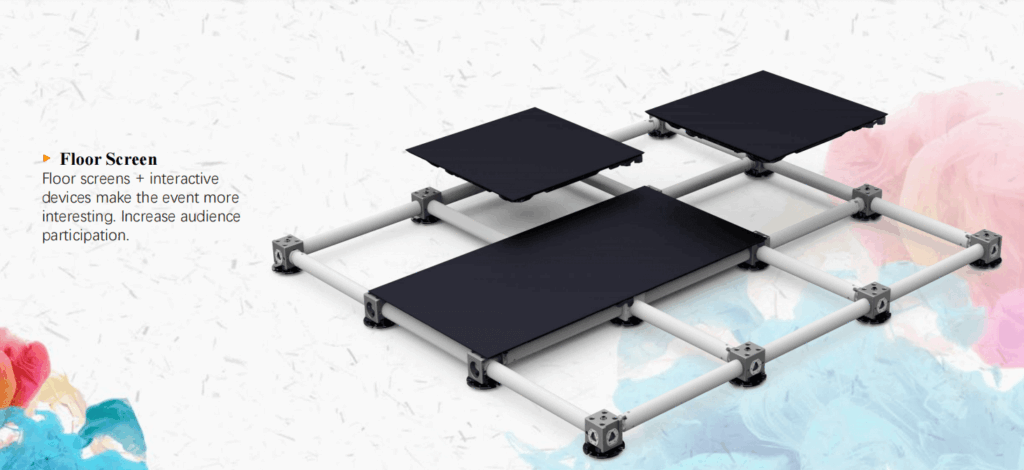
Product Recommendation: Hima Series (All-in-One Rental Solution)
Key Advantage
Designed for XR virtual production and premium interactive stages, the Hima Series is a versatile all-in-one solution.
It can function as:
-
A P2.5 HD floor screen
-
A vertical LED wall
-
A 90° corner display structure
Interaction Performance
-
Refresh rate: 7680 Hz
-
Response time: < 20 ms
Even during high-speed movement, the screen responds instantly and accurately.
How to Choose Based on Your Role (Buying Strategy)
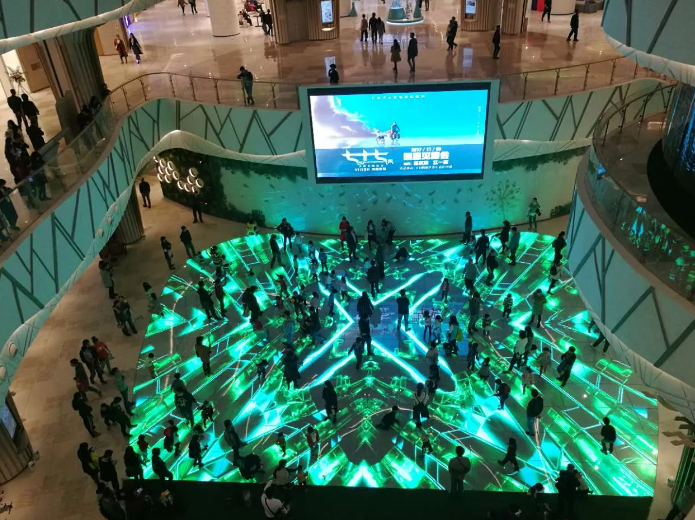
Different decision-makers should evaluate different price metrics.
For Entertainment Company Procurement Managers
Focus:
-
Fast installation
-
Product versatility
Recommendation:
Choose solutions like the Hima or Carbon Pro series, which feature quick-lock systems and lightweight cabinets.
While the upfront price may be slightly higher, the savings in labor and logistics costs are substantial.
For Manufacturing Engineers
Focus:
-
Load-bearing capacity
-
IP protection rating
-
Heat dissipation
Recommendation:
Consider the Storm Pro or ARES series.
Pay close attention to:
-
All-aluminum cabinet structures
-
Dual waterproof sealing technology
These features ensure long-term stable operation in industrial or outdoor high-brightness environments.
For Distributors or Export Factory Owners
Focus:
-
Certifications
-
Supply capacity
Recommendation:
Evaluate manufacturers with large-scale production facilities, such as 15,000 m² factories, to ensure stable delivery schedules.
Make sure the supplier provides complete certifications, including:
-
CE
-
ETL
-
FCC
This prevents products from being held at customs, which can become the most expensive hidden cost.
FAQ: Interactive Floor LED Screen Price and Maintenance
Q1: What is the typical lifespan of an interactive LED floor screen?
Sostron floor screens are designed for a lifespan of 100,000 hours.
With GOB encapsulation and periodic calibration, brightness can still remain above 70% after 6–8 years of use.
Q2: Can the screen be cleaned with water?
Yes.
The ARES and Storm series feature IP65–IP68 dual-side waterproof protection.
Cleaning with a damp cloth or low-pressure water is safe, provided the cable connections remain properly sealed.
Q3: Does maintenance require removing the entire floor?
No.
Sostron screens support full front maintenance.
Using a vacuum suction tool, a technician can replace a damaged module within 30 seconds, without affecting surrounding screens.
Conclusion
In 2026, the interactive floor LED screen price is no longer a vague number.
Instead, it represents a system-level investment involving materials science, interactive algorithms, and long-term operational costs.
Choosing Sostron means you’re not just purchasing a screen—you’re investing in 14 years of manufacturing expertise and a 4,000 m² R&D foundation that ensures reliability and peace of mind.
If you are currently planning a project or preparing a procurement budget, contact our engineering experts to receive a one-on-one customized quotation and technical solution.
References:
